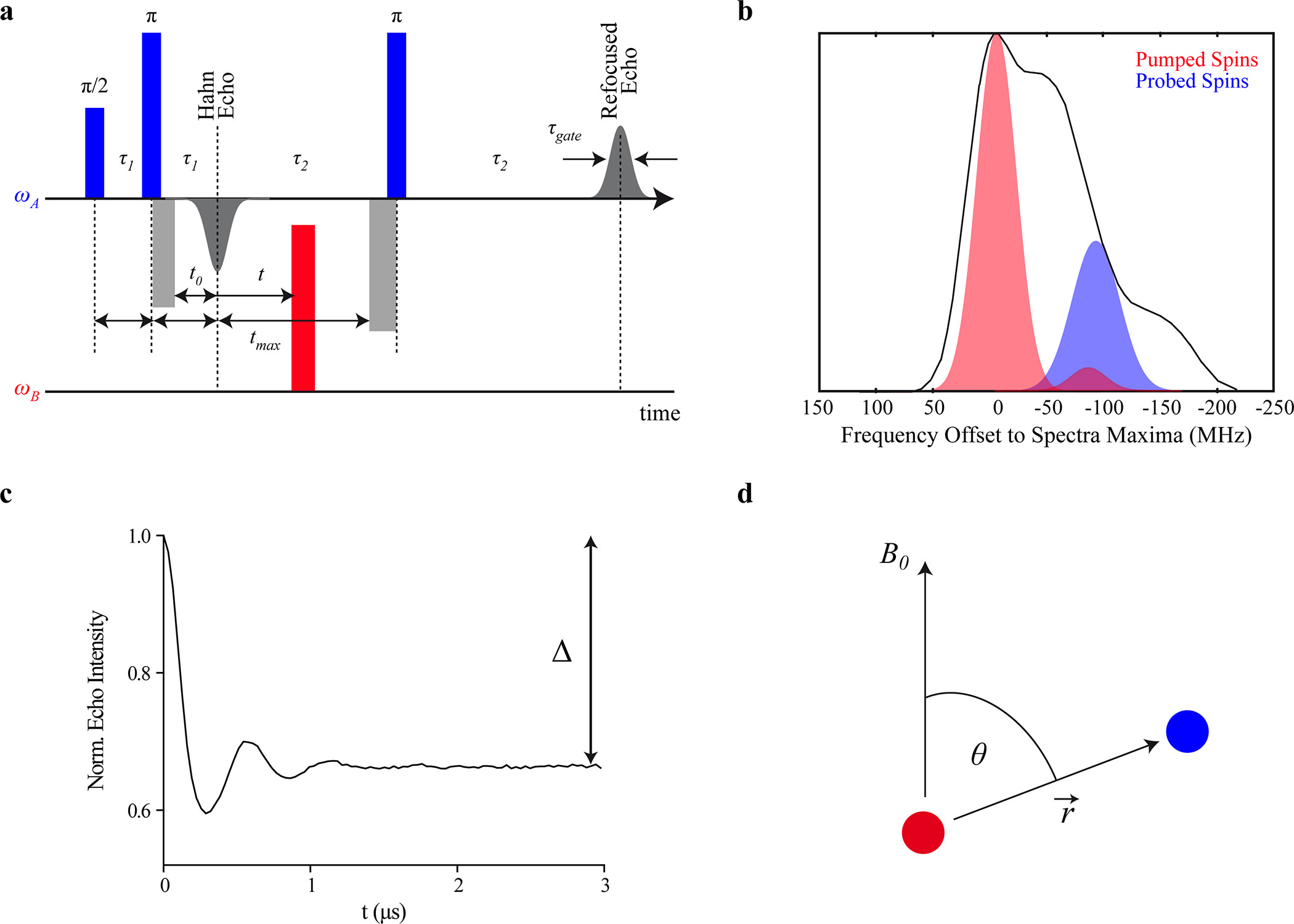
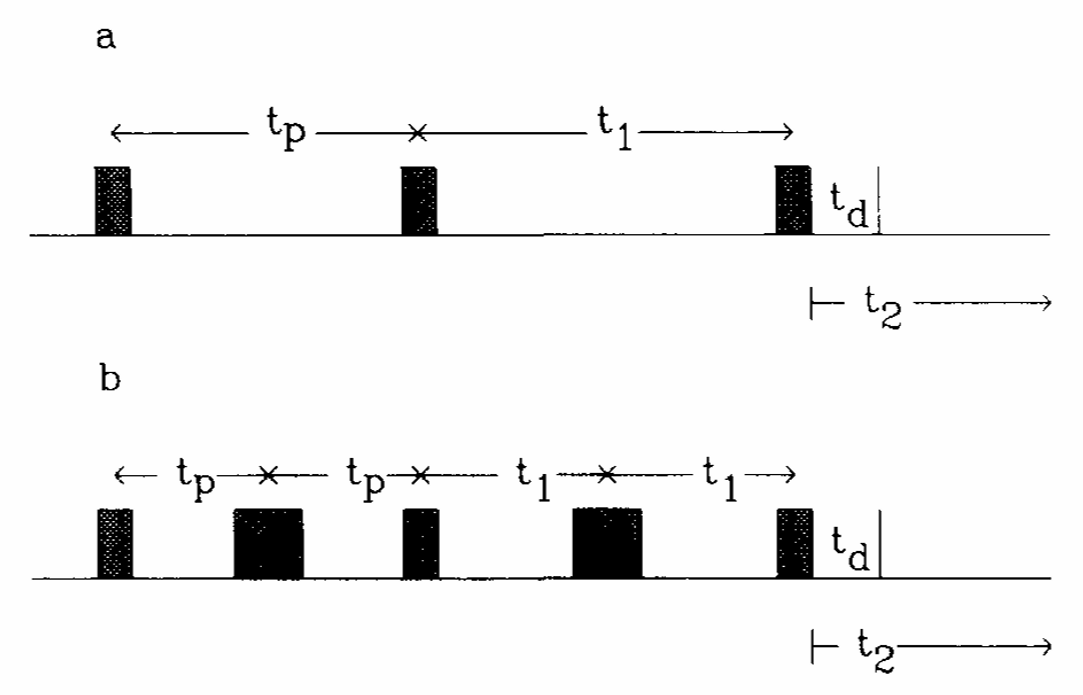
ABSTRACT: Distance distribution information obtained by pulsed dipolar EPR spectroscopy provides an important contribution to many studies in structural biology. Increasingly, such information is used in integrative structural modeling, where it delivers unique restraints on the width of conformational ensembles. In order to ensure reliability of the structural models and of biological conclusions, we herein define quality standards for sample preparation and characterization, for measurements of distributed dipole–dipole couplings between paramagnetic labels, for conversion of the primary time‐domain data into distance distributions, for interpreting these distributions, and for reporting results. These guidelines are substantiated by a multi‐laboratory benchmark study and by analysis of data sets with known distance distribution ground truth. The study and the guidelines focus on proteins labeled with nitroxides and on double electron–electron resonance (DEER aka PELDOR) measurements and provide suggestions on how to proceed analogously in other cases.
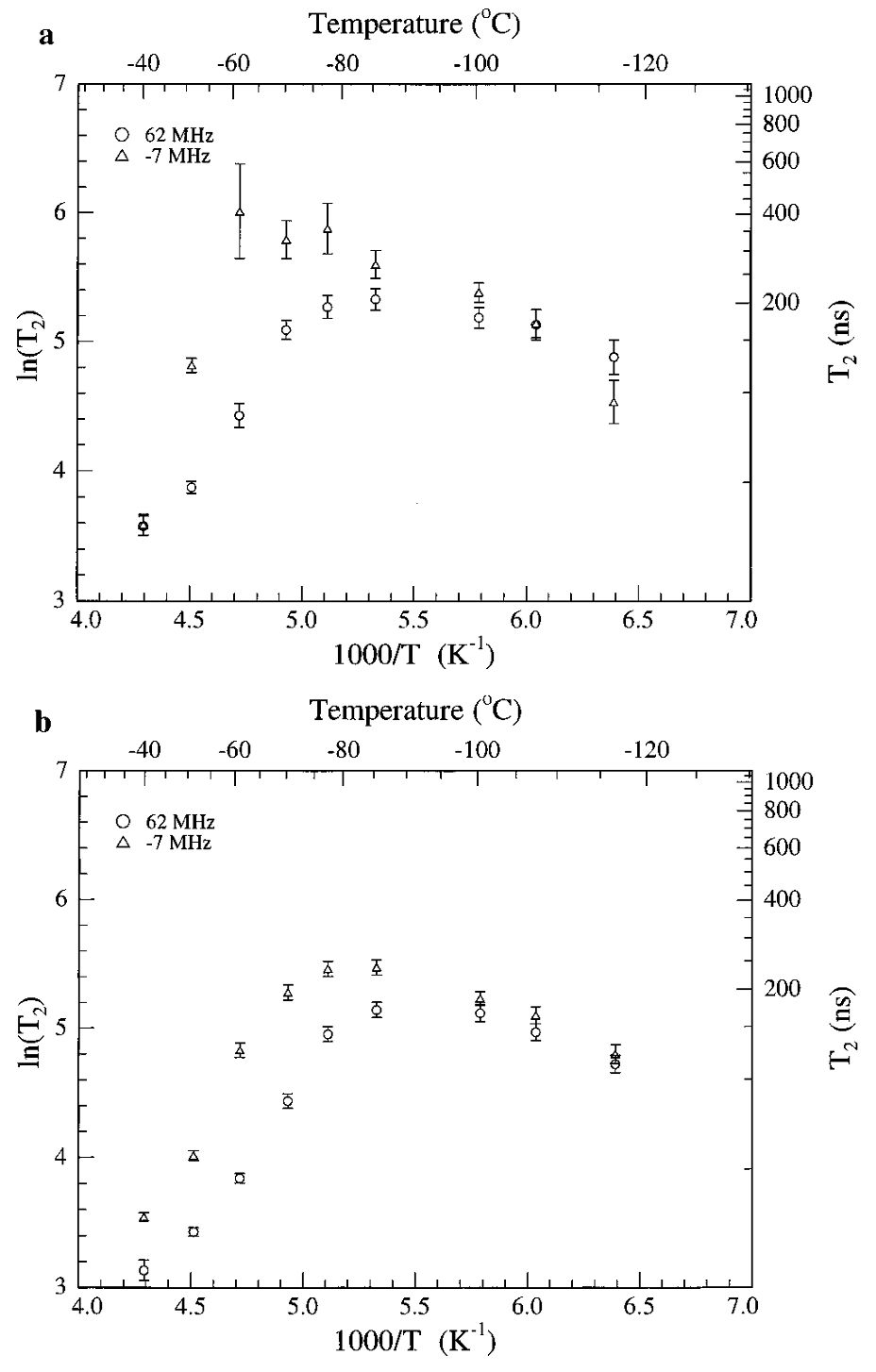
ABSTRACT: The slow rotational dynamics of a polyproline peptide with a nitroxide labeled at one end in a glassy medium is probed using two-dimensional (2D) electron spin resonance (ESR). The contributions to the homogeneous relaxation time, T2, from the overall and∕or the internal rotations of the nitroxide is elucidated from the COSY spectra. The use of pure absorption spectra allows the variation of T2 across the spectrum to be monitored. It is shown from simulations that the model of anisotropic Brownian diffusion provides semiquantitative agreement with such a variation. In the 2D ELDOR experiment several mechanisms can lead to spectral diffusion, which yields a broadening of the hyperfine (hf) auto-peaks with mixing time. We call these spectral diffusion (SD) cross-peaks. It is shown that at higher temperatures the principal mechanism for the formation of SD cross-peaks is the slow reorientation of the molecule, which modulates the 14N hf and g tensor interactions. A procedure is shown for extracting a correlation time, τc, by monitoring this growth of SD cross-peaks, which is in good agreement with theory. An anomalous temperature dependence of the experimental τc, at very low temperatures, is tentatively attributed to the fast internal rotations of the methyl groups on the nitroxide, which leads to spin-flips of the protons on these methyl groups. The use of pure absorption spectra in 2D ELDOR enhances the sensitivity to these cross-peaks.
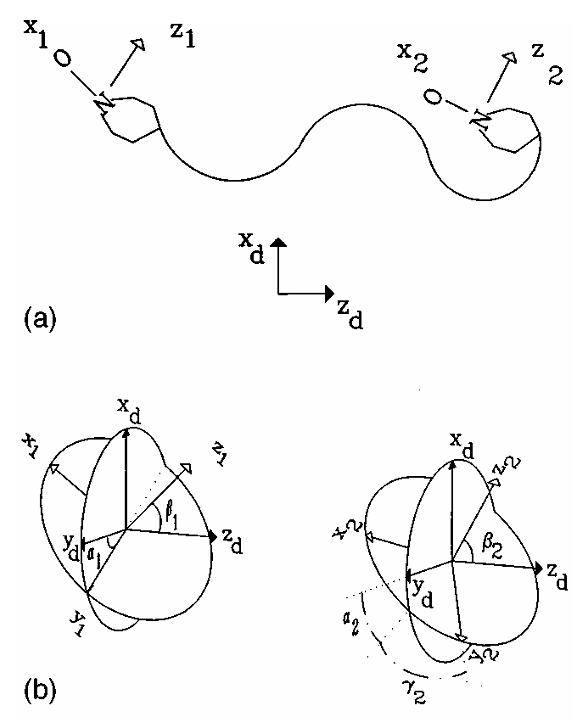
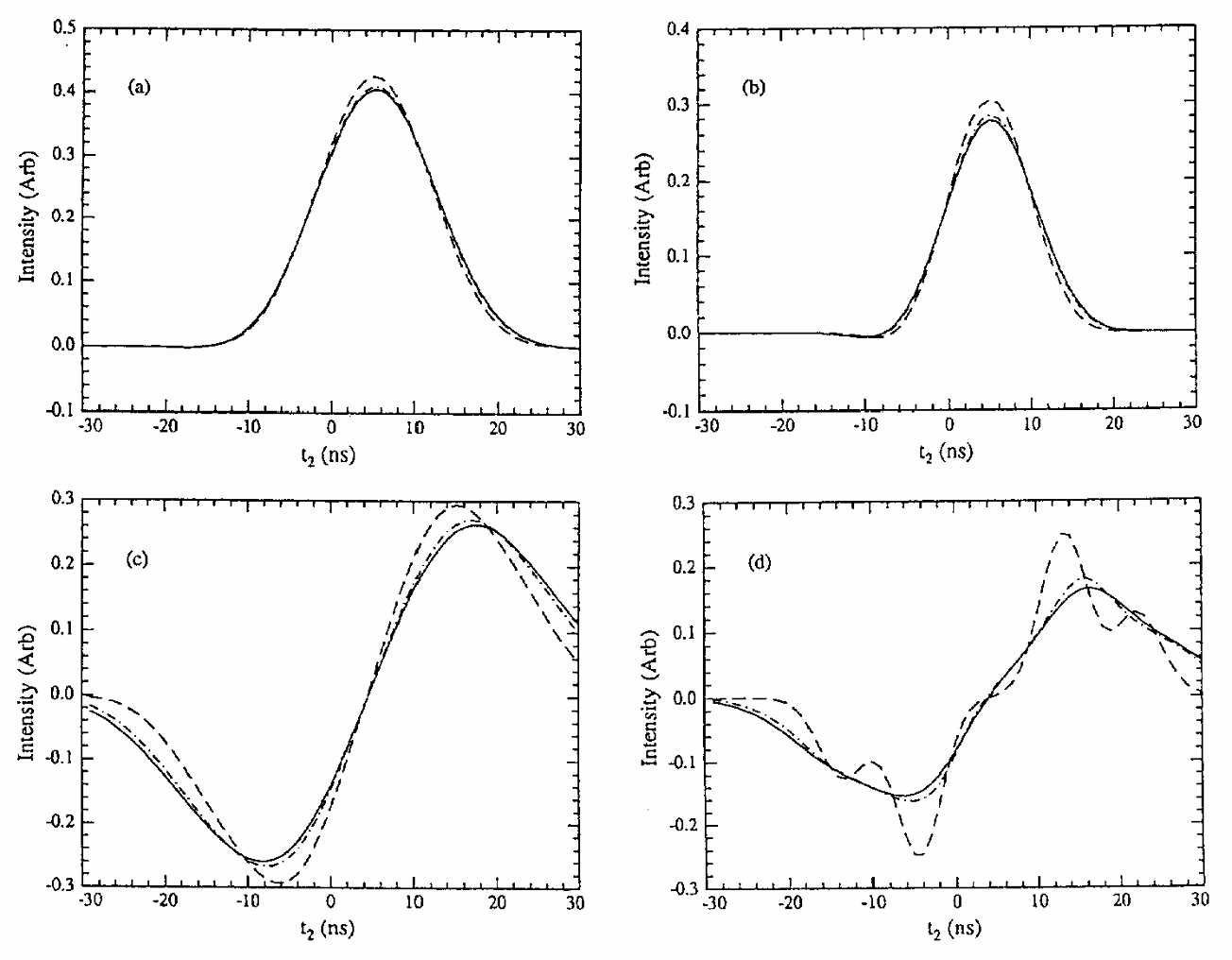
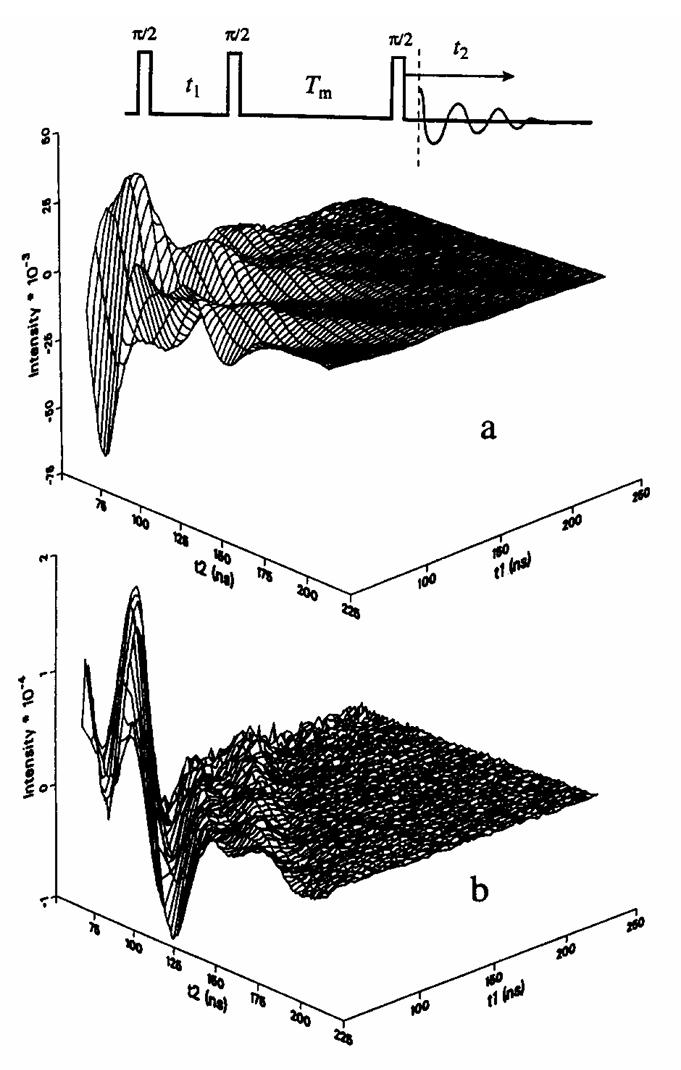
ABSTRACT: A formulation is presented for calculating double quantum two dimensional electron spin resonance (DQ-2D ESR) spectra in the rigid limit that correspond to recent experimental DQ-2D ESR spectra obtained from a nitroxide biradical. The theory includes the dipolar interaction between the nitroxide moieties as well as the fully asymmetric g and hyperfine tensors and the angular geometry of the biradical. The effects of arbitrary pulses (strong but not truly nonselective pulses) are included by adapting the recently introduced split Hamiltonian theory for numerical simulations. It is shown how arbitrary pulses in magnetic resonance create "forbidden" coherence pathways, and their role in DQ-2D ESR is delineated. The high sensitivity of these DQ-2D ESR signals to the strength of the dipolar interaction is demonstrated and rationalized in terms of the orientational selectivity of the "forbidden" pathways. It is further shown that this selectivity also provides constraints on the structural geometry (i.e., the orientations of the nitroxide moieties) of the biradicals. The theory is applied to the recent double quantum modulation (DQM) experiment on an end-labeled poly-proline peptide biradical. A distance of 18.5 Å between the ends is found for this biradical. A new two pulse double quantum experiment is proposed (by analogy to recent NMR experiments), and its feasibility for the ESR case is theoretically explored.
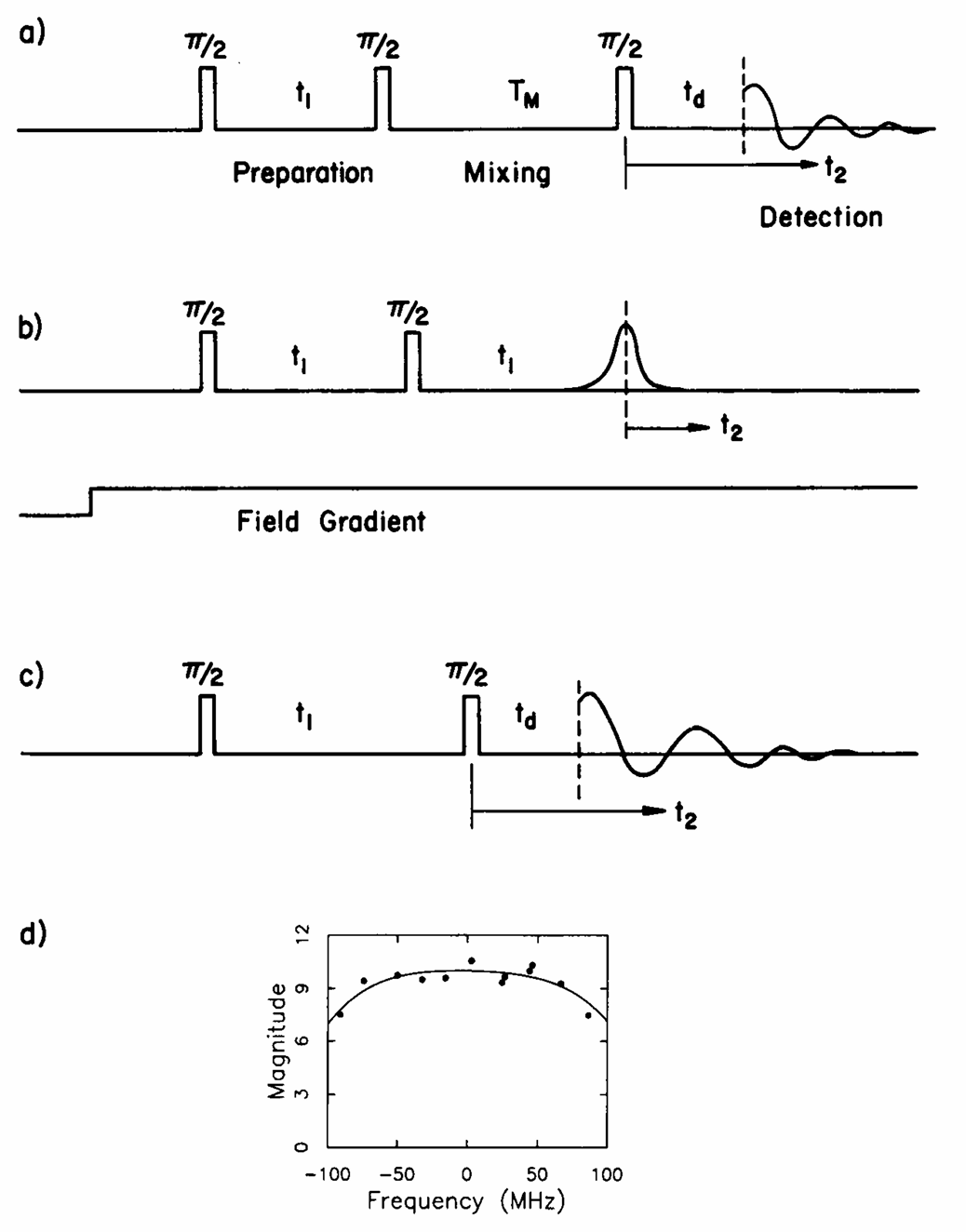
ABSTRACT: A methodology for obtaining pure absorption two-dimensional electron spin resonance spectra is presented for the case of large inhomogeneous broadening and/or slow motions. For slow motions, the spectra consist of "complex Lorentzians" superimposed with complex weighting factors, presenting a challenge to obtaining absorption spectra. It is shown how absorption-type spectra can be recovered for the two-pulse COSY and SECSY experiments in such cases. For three-pulse 2D ELDOR experiments, absorption lineshapes can be obtained for the autopeaks, whereas the cross peaks would be of mixed-mode character, in general. However, for practical cases the dispersive components in the cross peaks will be relatively small. Theoretical and experimental absorption spectra are provided to illustrate the method and to show the improved resolution obtained from absorption lineshapes. In particular, the variation in linewidths across a SECSY spectrum, which is a key component in elucidating motional dynamics, is clearly rendered in the pure absorption mode. A convenient method for introducing the necessary phase corrections for the slow-motional spectra is also provided.
ABSTRACT: We introduce split Hamiltonian theory (SHT) to analyze arbitrary pulses in magnetic resonance, i.e. pulses substantial in magnitude but not non-selective. The range of validity of the lower order approximations is discussed, and the method is illustrated by applying it to the consideration of pulse adjustable spectroscopies in time domain ESR that are utilized to study nuclear modulation. A virtue of SHT is that, whereas the approximate analytic solutions can provide useful insights, it can also be iterated numerically to achieve quantitatively accurate solutions
ABSTRACT: The application of the "model trust region" modification of the Levenberg–Marquardt minimization algorithm to the analysis of one-dimensional CW EPR and multidimensional Fourier-transform (FT) EPR spectra especially in the slow-motion regime is described. The dynamic parameters describing the slow motion are obtained from least-squares fitting of model calculations based on the stochastic Liouville equation (SLE) to experimental spectra. The trust-region approach is inherently more efficient than the standard Levenberg–Marquardt algorithm, and the efficiency of the procedure may be further increased by a separation-of-variables method in which a subset of fitting parameters is independently minimized at each iteration, thus reducing the number of parameters to be fitted by nonlinear least squares. A particularly useful application of this method occurs in the fitting of multicomponent spectra, for which it is possible to obtain the relative population of each component by the separation-of-variables method. These advantages, combined with recent improvements in the computational methods used to solve the SLE, have led to an order-of-magnitude reduction in computing time, and have made it possible to carry out interactive, real-time fitting on a laboratory workstation with a graphical interface. Examples of fits to experimental data will be given, including multicomponent CW EPR spectra as well as two- and three-dimensional FT EPR spectra. Emphasis is placed on the analytic information available from the partial derivatives utilized in the algorithm, and how it may be used to estimate the condition and uniqueness of the fit, as well as to estimate confidence limits for the parameters in certain cases.
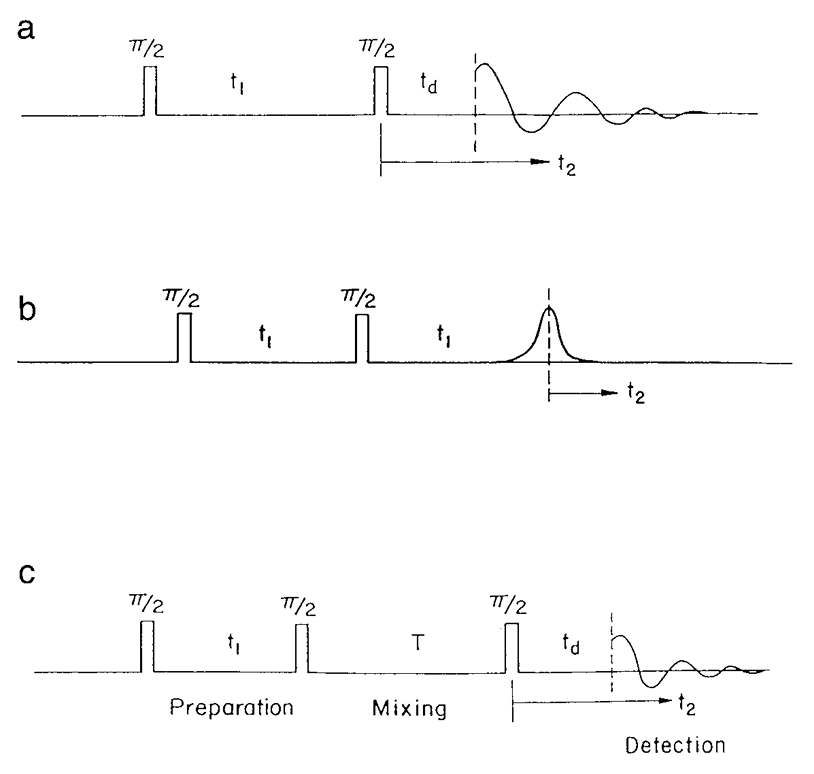
ABSTRACT: The first double quantum two-dimensional Fourier transform electron spin resonance (2D-FT ESR) experiments are reported. Extension of 2D-FT ESR to enable detection of the ΔMs = ±2 transition enhances the capability of ESR in studying structural properties (i.e. distances in bilabeled molecules). A distance of 21 Å was found for a poly-proline peptide, spin labeled at both ends, in agreement with earlier measurements using fluorescence energy transfer.
ABSTRACT: The first two-dimensional Fourier-transform electron spin resonance (2D-FT-ESR) studies of nitroxide-labeled lipids in membrane vesicles are reported. The considerable enhancement this experiment provides for extracting rotational and translational diffusion rates, as well as orientational ordering parameters by means of ESR spectroscopy, is demonstrated. The 2D spectral analysis is achieved using theoretical simulations that are fit to experiments by an efficient and automated nonlinear least squares approach. These methods are applied to dispersions of 1-palmitoyl-2oleoyl-sn-glycerophosphatidylcholine (POPC) model membranes utilizing spin labels 1-palmitoyl-2-(16-doxyl stearoyl) phosphatidylcholine and the 3-doxyl derivative of cholestan-3-one (CSL). Generally favorable agreement is obtained between the results obtained by 2D-FT-ESR on vesicles with the previous results on similar systems studied by continuous wave (cw) ESR on aligned samples. The precision in determining the dynamic and ordering parameters is significantly better for 2D-FT-ESR, even though the cw ESR spectra from membrane vesicles are resolved more poorly than those from well aligned samples. Some small differences in results by the two methods are discussed in terms of limitations of the methods and∕or theoretical models, as well as possible differences between dynamic molecular structure in vesicles versus aligned membranes. An interesting observation with CSL∕POPC, that the apparent homogeneous linewidths seem to increase in "real time," is tentatively attributed to the effects of slow director fluctuations in the membrane vesicles.
ABSTRACT: Two-dimensional Fourier-transform ESR spectra from a complex fluid characterized by very short free induction decay times are reported. They provide enhanced resolution to dynamic molecular structure compared to conventional cw-ESR spectra which are inhomogeneously broadened by the macroscopic disorder. A general theoretical analysis based on the stochastic Liouville equation permits us to accurately determine the microscopic ordering and motional dynamic rates by non-linear least-squares fitting to experiment.
.svg)